
Case study / Portal Survivor
How Portal Survivor built a creative system that kept producing campaign winners
How Portal Survivor paired campaign data with a scalable creative system to increase production and keep finding new paid-campaign winners.
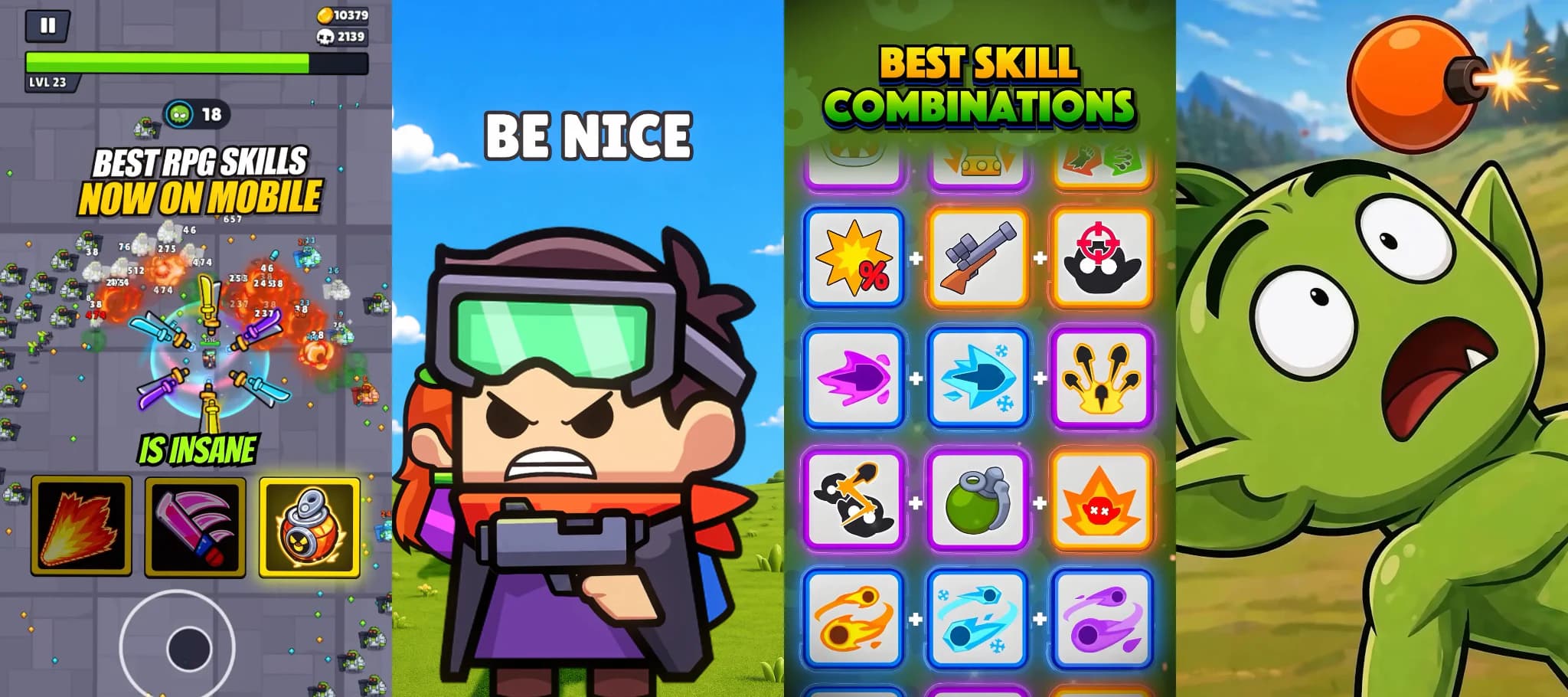
Portal Survivor was moving from test campaigns into soft launch.
They needed more creatives than their internal team could consistently produce. Within a few months, Quadral helped them double or triple production, and several of those creatives went on to take the top positions in paid campaigns.
The Constraint
No dedicated marketing artists in-house. Rising user acquisition spend. Campaigns that needed constant refreshing to avoid leaning on the same handful of ads.
Portal Survivor had the campaign data and the game knowledge. What they did not have was enough creative capacity to act on it.
As we moved from test campaigns to soft launch, thanks to Quadral we doubled / tripled the ad creative production, with much higher quality, as we did not have dedicated marketing artists in the team.
- Erdem, Co-founder & COO at ESC Games
How the Relationship Changed
Most concepts did not wait for a brief.
Quadral kept generating original ideas, drawing on the game, competitor research, and whatever angle had not been tried yet. Portal Survivor's input tended to show up once something was already working, shaping and prioritizing from there rather than sourcing every idea from scratch.
We shared signals from the campaigns and rough ideas. Taking it from there, shaping the concepts up, proposing new and smart ideas as well, and delivering with great quality and on time. What else could we expect?
- Erdem
That loop is also why production evolved past single, one-off videos.
Instead of one concept per slot, a single approved concept now often ships as one main video plus hook variations. The same body can be tested against several different openings instead of betting everything on one.
The First Major Winner: Hero Skills
This concept started during one of our calls.
I asked the Portal Survivor team what made the game different. One thing they pointed out was the skill system. Several abilities were inspired by mechanics players might recognize from popular PC games.
My first idea was to make that connection explicit and reference specific games in the creative, hoping to catch the attention of players who already enjoyed them.
We decided to play it safe from a copyright and branding standpoint. Instead of naming those games directly, we built the entire concept around the skills themselves.
One angle, fully committed to: the skills are the spectacle.
No attempt to explain every system. Skill after skill, visual payoff after visual payoff.
The creative ran on iOS across the US, UK, and Canada.
This one is the clear winner. Took the top spot immediately and drove the campaign for 3-4 weeks.
We cannot isolate creative from targeting, bids, or game economy. But a few things about the creative itself are worth naming: the idea was instantly readable, the payoffs never stopped coming, and the spectacle came from real gameplay, not around it.
The original concept was even more specific. We removed the direct game references to keep the execution safer, but the core idea still worked. The skills were strong enough to carry the concept on their own.
The Second Creative: Characters Amber
This was a different angle entirely. Where Hero Skills sold raw power, Characters Amber leaned into character choices, upgrades, and progression.
This took the second spot, did not take over but has been running at decent scale.
- Erdem
That matters more than it looks. It is proof this was not one lucky hit. Two different ideas, built around two different appeals, both earned real positions in the same campaign.
What Campaign Feedback Taught Us
A few patterns are worth passing on to any team running a similar setup.
Real gameplay performed particularly well on the main UA channel. Simpler playable concepts showed more promise on other channels. The same game had different formats winning across different channels.
UGC and animation did not replace gameplay; they ran alongside it. Different formats did different jobs within the same campaign rather than competing to become the one winning ad.
A hook that wins can be reused. Once an opening earns attention reliably, it is worth testing against other proven gameplay bodies, not just the video it was originally built for.
Not every concept we liked worked. Some ideas looked promising going in and did not get meaningful spend. That is normal. The point is not predicting one perfect ad. It is producing enough informed bets that the campaign can reveal which ones are right.
New game features keep creating new angles. New characters and skills each opened fresh concepts to test. Features still on the roadmap, including an upcoming PvP mode, will do the same.
The Real Lesson
The lesson is not that Quadral knows how to make guaranteed winning ads.
A scalable creative process needs two sides: campaign data from the user acquisition team, and enough creative capacity to turn those signals into new tests quickly.
Portal Survivor had the first. Quadral supplied the second, alongside concept development, production, and iteration.
We did not control the campaigns, bids, targeting, game economy, or media buying. What we controlled was the amount and quality of creative ideas Portal Survivor had available to test.
Several creatives took the top spot of the campaigns and ran at scale for weeks.
- Erdem
That result speaks for itself. It does not need to be overstated.
From Erdem, Co-founder & COO at ESC Games
Especially appreciate your positivity, high energy, and ownership to deliver the best. Thank you!